
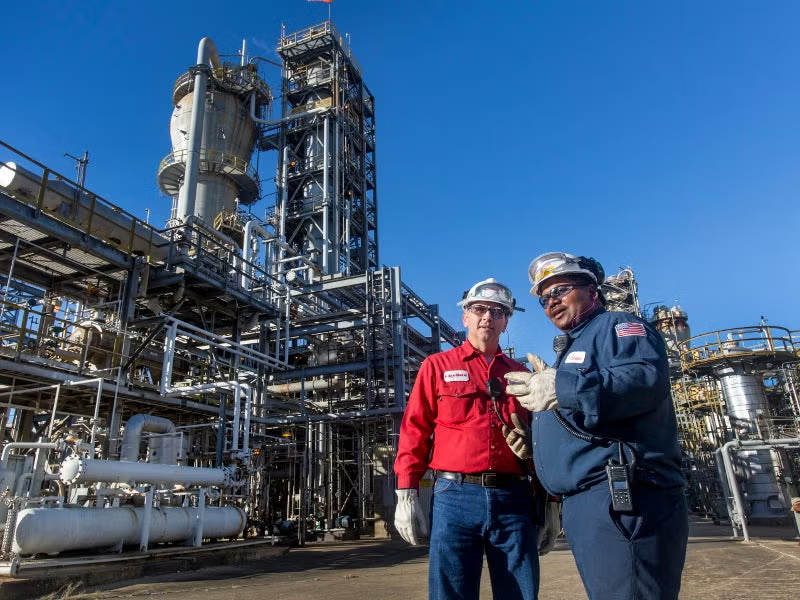
People do not move to Beaumont for skyline glamour, and that is part of the point. Beaumont real estate works because paychecks, shift schedules, port traffic, hospital jobs, and plant contracts keep the city useful even when trendier Texas markets cool off. Buyers and renters looking at Southeast Texas housing market conditions usually want one thing first: a practical read on whether industrial demand can support stable housing. The answer is yes, but not in a simple boom-town way. Beaumont is tied to refinery employment, port jobs, health care, schools, Lamar University, and the daily needs of workers who want short commutes more than postcard views. That gives the market a working backbone, not a hype cycle. For readers comparing industrial cities, regional property market insights can help frame why towns like Beaumont behave differently from Austin suburbs or Dallas exurbs. The catch is clear. You have to price in flood risk, insurance, older housing stock, and block-by-block differences before calling any deal cheap.
Why Industry Gives the Housing Market a Different Pulse
Beaumont does not move like a lifestyle market. It moves like a city where people clock in early, work long shifts, and want a home that does not make life harder. That creates a housing pattern that feels plain on the surface but has more staying power than many outsiders expect.
The strongest clue is employment. The Beaumont-Port Arthur area sits inside one of America’s heavier petrochemical and logistics corridors, with chemical and petroleum manufacturing, transportation, and materials production shaping the local job base. The Port of Beaumont’s trade activity was tied to more than 157,000 Texas jobs in the state comptroller’s 2024 estimate, while BLS data showed the metro labor force near 184,000 in spring 2026. Those are not small-city numbers wearing a small-city costume.
Refinery Paychecks Create Practical Housing Demand
Refinery employment changes the buyer profile. A plant operator, pipefitter, inspector, safety worker, or contractor may not be hunting for a trendy loft. They may want a three-bedroom house with a driveway, a reasonable commute, a garage for tools, and enough space for family visits after a turnaround schedule.
That sounds basic. It is not.
In many cities, housing demand leans on office growth, remote workers, or investor mood. Beaumont has some of that, but its harder floor comes from industrial work that still needs people near the site. ExxonMobil’s Beaumont refining and petrochemical site, the nearby Port Arthur refining base, and the broader Golden Triangle job map keep demand close to I-10, U.S. 69, and plant routes.
The counterintuitive part is that heavy industry can support modest housing without making every house expensive. Automation and plant efficiency mean a refinery can expand output without adding workers in the old-fashioned way. So the local property market gets support from good wages, but not always the wild population surge you might expect from an energy headline.
That makes patience matter. A seller cannot assume “industry town” means instant bidding wars. A buyer cannot assume “affordable” means weak demand. Beaumont sits between those ideas.
Port Jobs Keep the Market Tied to Movement
The Port of Beaumont adds another layer because port jobs do not stop at dock gates. Trucking, rail, warehousing, inspection, fuel movement, vessel support, maintenance, and local services all feed from the same trade engine. The Texas Comptroller’s Port of Beaumont profile reported about $23 billion in 2024 trade through the port, with mineral fuels and organic chemicals making up the bulk of exports.
That matters for housing because renters and buyers follow work patterns. A worker who starts before sunrise may value a 15-minute commute more than a newer subdivision farther out. A contractor in town for months may rent near major roads rather than chase the cheapest unit on paper. A family with one spouse in health care and another tied to industrial work may choose Beaumont because it splits the commute better than Port Arthur or Orange.
Port jobs also create a quiet rental base. It is not the same as a college-town lease rush. It is steadier, more tied to crews, projects, and working households.
Here is the twist: the port’s strength can help the city even when it does not make the city feel hot. Freight, fuel, and chemicals do not create the same visible buzz as a new downtown entertainment district. But they can keep people paid. In real estate, paid people matter more than glossy brochures.
Where Beaumont Real Estate Finds Its Affordability Edge
The city’s biggest advantage is not that every property is cheap. It is that the relationship between income, rent, and purchase price still gives regular working households a chance. That is getting rare in Texas, even in cities that used to be considered easy entry points.
Census data puts Beaumont’s 2020–2024 median household income below the Texas figure, but local housing costs also sit far below most large metros. Zillow’s June 2026 rental data showed average rent around $1,195, roughly 40% below the national average. Redfin’s recent sales data had the local median sale price near $219,000 for the three months ending May 2026. Those numbers do not make life effortless, yet they explain why the market keeps drawing first-time buyers, renters, and small investors.
The Entry Price Still Leaves Room for Working Buyers
A Beaumont buyer often has choices that disappeared in bigger Texas cities. In Houston, Dallas, Austin, or even parts of San Antonio, a starter home can feel like a bidding contest against higher salaries. In Beaumont, the search still includes older brick homes, ranch layouts, postwar houses, and modest newer builds that can work for local wages.
That does not mean easy approval. Mortgage rates still bite. Insurance can surprise buyers. Repairs on older homes can turn a “deal” into a lesson. But the starting line is lower, and that changes the math.
A refinery mechanic making stable overtime may be able to look at a practical home near West End, Amelia, or the edges of major corridors without needing big-city income. A teacher and a hospital employee may still find options that keep the monthly payment from swallowing the whole household budget. That is the market’s selling point.
For a deeper comparison later, a buyer could pair Beaumont research with Texas starter-home affordability trends and then weigh local costs against broader state patterns. The local decision is not only “Can I buy?” It is “Can I buy without becoming house poor?”
The non-obvious risk is that affordability can hide deferred maintenance. Lower purchase prices sometimes mean roofs, drainage, HVAC systems, foundations, or plumbing need a sharper look. In Beaumont, the cheapest house is not always the best house. The better deal may be the one with boring records and fewer surprises.
Renters Are Not Only Waiting to Buy
Many people treat renting as a temporary stage before ownership. In Beaumont, renting also serves a workforce function. Contractors, traveling nurses, plant workers on limited assignments, Lamar University students, and families testing the area all feed rental demand.
That makes the rental market useful for small landlords, but not foolproof. Beaumont rents are affordable compared with national levels, so landlords cannot always cover sloppy buying with high rent. Cash flow depends on buying at the right price, keeping repairs under control, and understanding tenant demand by location.
A two-bedroom rental near practical roads may outperform a larger house that looks better online but sits far from daily routes. A clean, safe, well-managed unit can beat a flashy remodel if the rent matches local pay. That is Beaumont in one sentence.
The Southeast Texas housing market rewards common sense. It punishes fantasy.
For renters, the same logic applies. A cheaper rent loses value if the commute is rough, the drainage is poor, or utility costs eat the savings. A slightly higher rent near work, school, or medical care may feel better month after month.
The Risks Buyers Cannot Treat as Side Notes
Every affordable industrial city has a bill attached. In Beaumont, that bill often shows up through weather, insurance, older structures, and uneven neighborhood conditions. You cannot judge the market by sale price alone. The monthly cost and the risk profile matter more.
That is where first-time buyers can get trapped. They compare Beaumont prices to Houston prices and feel like they found a secret. Then they meet flood maps, wind coverage questions, roof age, foundation issues, and repairs left behind by prior owners. The city can still be a smart buy. But only for people who inspect with their eyes open.
Flood Maps and Insurance Can Change the Real Cost
Southeast Texas has a long memory for water. Beaumont buyers should check FEMA flood maps, ask about past flooding, review elevation where possible, and price insurance before falling in love with a house. FloodSmart, the National Flood Insurance Program site, makes one point every Gulf Coast buyer should remember: most homeowners and renters policies do not cover flood damage.
That single fact changes the deal.
A house can look affordable at the contract price and become less attractive once flood coverage, windstorm questions, deductibles, and repair reserves enter the picture. Even outside a required flood zone, buyers should ask about street drainage, nearby ditches, prior claims, and how water moves during hard rain.
The counterintuitive insight is that a house outside the most obvious risk area is not automatically safe, and a house inside a mapped area is not automatically a bad buy. Price, elevation, mitigation, insurance cost, and exit value all work together. The lazy answer is “avoid flood zones.” The better answer is “understand the water before you bid.”
This is where local agents, inspectors, and insurance brokers earn their fee. A buyer should not wait until the option period is almost over to learn what coverage costs.
Older Homes Need a Repair Budget, Not Hope
Beaumont has charm in its older housing stock. You can find porches, big lots, mature trees, and layouts that feel built for real family life. You can also find old electrical panels, tired drainage, roof patches, soft subfloors, and air conditioning systems that have fought too many Gulf summers.
Hope is not a budget.
A buyer looking at a lower-priced home should set aside cash for repairs before talking about paint colors. A landlord should price vacancy and maintenance into the deal before celebrating a high projected return. A seller should fix obvious issues before listing if the goal is to attract financed buyers.
One real-world example is a modest house with a low list price and an aging roof. The online payment may look easy. But if the roof blocks insurance, delays closing, or forces a costly replacement, the deal changes overnight. The buyer who planned for that may still win. The buyer who ignored it may walk away poorer.
This is why home inspection mistakes first-time buyers should avoid belongs on the reading list before anyone shops seriously in an older Gulf Coast market. The inspection is not a formality here. It is the line between value and regret.
Who Should Buy, Rent, or Invest in Beaumont
The right move depends on why you are in the city. Beaumont can make sense for a long-term worker, a family wanting space, a retiree who understands weather risk, or an investor who respects local rents. It may disappoint someone looking for fast appreciation, luxury polish, or big-city nightlife.
That does not make the market weak. It makes it specific. Specific markets can be good markets when you stop asking them to behave like somewhere else.
Buyers Need a Five-Year Reason to Stay
A home purchase in Beaumont works best when the buyer has a five-year reason to stay. That reason might be refinery employment, a hospital job, family roots, school needs, or a realistic plan to hold the property as a rental later. The shorter the timeline, the more careful the buyer should be.
Transaction costs can eat small gains. Repairs can arrive before appreciation. Insurance can rise. A short-term buyer who needs to move fast may not get the exit they imagined.
But for a stable household, Beaumont can offer something valuable: breathing room. More house for the money. Shorter commutes. A lower rent-to-own ladder. Less pressure to chase the far edge of a metro to afford a yard.
The Southeast Texas housing market is not built on fantasy wealth. It is built on work, weather, and patience. That may sound plain, but plain can be profitable when the numbers make sense.
A useful buyer rule is simple: do not buy the biggest house the bank allows. Buy the house that still lets you handle a roof repair, a storm deductible, or a slow month. In Beaumont, safety margin is not fear. It is wisdom.
Investors Should Follow Jobs, Not Hype
Small investors often ask whether Beaumont is a good rental market. The better question is whether a specific property fits a specific tenant base. A house near job corridors, schools, hospitals, or practical shopping may work. A property that only looks cheap may drain cash.
Refinery employment and port jobs help support demand, but they do not excuse poor management. Tenants still want clean homes, working air conditioning, safe parking, and fair rent. The landlord who treats Beaumont like a bargain bin will learn an expensive lesson.
A smart investor studies rent by bedroom count, checks insurance before closing, and keeps repair reserves higher than a spreadsheet wants. Industrial towns can have strong tenants, but they can also have hard-wearing homes. People work shifts. Kids play in yards. Gulf humidity does its work every day.
The unexpected upside is that boring upgrades can matter more than luxury finishes. Durable flooring, good drainage, a newer HVAC system, covered parking, and dependable appliances may beat fancy counters in many rentals. The tenant wants life to work after a 12-hour shift.
That is Beaumont’s real investment lesson. Serve the working household well, and the market makes sense.
Conclusion
Beaumont is not trying to be the next Austin, and buyers should be thankful for that. Its property market is tied to refineries, the port, health care, education, roads, and the steady needs of people who work for a living. That gives it a different kind of value.
The best reading of Beaumont real estate is not “cheap Texas homes” or “industrial boom town.” It is a practical market where income, risk, commute, and housing condition have to be measured together. A good deal here is not the lowest price on the page. It is the home that fits local wages, survives local weather, and stays useful to the next buyer or renter.
For Americans priced out of larger metros, Beaumont deserves a serious look. For investors chasing fast gains, it demands discipline. The city rewards people who respect its industrial roots and study the property beyond the photos.
Buy with patience, insure with care, and never ignore the drainage.
Frequently Asked Questions
Is Beaumont a good place to buy a starter home?
Yes, it can be a strong starter-home market for buyers with stable local income and a plan to stay several years. The entry price is lower than many Texas metros, but inspections, insurance, flood history, and repair budgets should shape the final decision.
Why is Beaumont housing more affordable than bigger Texas cities?
Prices stay lower because Beaumont has slower population growth, older housing stock, and less lifestyle-driven demand than Austin, Dallas, or Houston. The local economy is strong in specific industrial fields, but it does not create the same broad wage pressure found in larger metros.
Do refinery jobs help support home values in Beaumont?
Yes, refinery jobs support demand by keeping skilled workers near the city and nearby industrial sites. The effect is steady rather than flashy. Good wages help buyers and renters, but automation and energy cycles can limit wild growth.
Are port workers a major part of rental demand?
They can be, along with contractors, logistics workers, plant employees, medical staff, and students. Rentals near useful roads and job corridors often make sense because tenants value commute time, parking, safety, and fair pricing more than luxury finishes.
What should buyers check before purchasing in Beaumont?
Start with flood risk, insurance quotes, roof age, HVAC condition, foundation signs, drainage, and past storm history. A low price can turn costly if the home needs major repairs or carries insurance costs the buyer did not expect.
Is Beaumont better for investors or owner-occupants?
It can work for both, but the strategy differs. Owner-occupants should focus on monthly comfort and long-term safety. Investors need rent proof, repair reserves, tenant demand by location, and realistic insurance numbers before closing.
Which buyers should avoid Beaumont?
Buyers wanting fast appreciation, luxury amenities, or big-city nightlife may feel limited. The city fits people who value affordability, industrial job access, space, and practical living. It is better for patient buyers than quick-profit shoppers.
How does flood insurance affect Beaumont home costs?
Flood coverage can raise the true monthly cost and may affect loan approval, depending on the property. Standard homeowners and renters policies usually do not cover flood damage, so buyers should price coverage early and review the property’s flood history before making an offer.